


Outdoor Pursuits
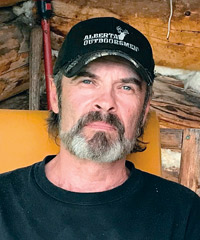
with Rob Miskosky
From the Editor - September 2026
As predicted, the fangs are out again against the use of dogs for black bear hunting in certain WMUs. The newest argument being made is by former Alberta Fish and Wildlife caribou expert Dave Hervieux and Banff-Kananaskis NDP MLA Sarah Elmeligi, who say in the Rocky Mountain Outlook that there is no scientific reason for believing black bears can affect caribou recovery. Hervieux calls the government’s rationale “not credible”, while Elmeligi calls it a “total farce” and an “outright lie.” That is a complete dismissal and one that the available science simply doesn’t support.
Nobody is arguing that black bears are the only problem facing Alberta’s caribou herds. Habitat changes, industrial disturbance and wolves are unquestionably part of the problem, but acknowledging that doesn’t make black bears killing caribou calves disappear. In fact, Alberta-specific research has shown black bears as potential predators of caribou calves.
A 2011 Canadian Journal of Zoology study of black bears and woodland caribou in northeastern Alberta found that, while caribou generally selected bogs and fens that black bears tended to avoid, some bears selected the same bog and fen habitats used by caribou during the calving period. The researchers concluded that bears specializing in peatland habitats might be responsible for some predation on caribou calves and recommended that caribou conservation consider all predators rather than focusing exclusively on wolves.
Even more recently, a 2026 peer-reviewed study by researchers from the University of Alberta, University of British Columbia and others examined the potential effects of black bear predation on caribou calves. Using data from 69 GPS-collared black bears in northeastern Alberta, they modelled the potential effects of bear predation on caribou calves. Although only 1.4% of bear locations overlapped calving habitat, their modelling showed that even infrequent bear-calf encounters could result in calf mortality.
Another current research project is titled, “Estimating black bear kill rates of boreal caribou calves and the resulting effect on caribou population dynamics”. Its researchers are using GPS collars and “bear’s-eye view” technology to identify calves killed by individual black bears and determine where bear predation has the greatest impact on caribou populations.
Apparently, the scientists conducting this work didn’t get Elmeligi’s memo that black bear predation is a “total farce.”
There is also abundant evidence from outside Alberta that black bears can be formidable predators of young ungulates. In a long-term 2018 Journal of Animal Ecology study (Newfoundland), black bear predation was the main source of mortality for caribou calves, accounting for an estimated 32% of calves by six months of age. An estimated average of 5,524 calves were born annually and black bears killed an estimated 1,763 calves by the time they were six months old.
Does that mean Alberta should indiscriminately kill black bears? Of course not. Wildlife management is not supposed to be indiscriminate; it is supposed to be targeted and adaptive. And that brings us to the real problem with Hervieux’s argument.
Hervieux spent much of his career arguing that predator control is a legitimate conservation tool. He was a co-author of the influential work on Alberta’s wolf-control program, in which wolves were killed by aerial gunning and poison (strychnine) to reduce predation on caribou. In fact, Hervieux himself publicly defended the use of strychnine for wolf control saying that in remote caribou ranges it was the only practical option.
This is where hypocrisy suddenly appears. When the predator is a wolf, Hervieux has argued that killing it can be justified because human disturbance has allowed wolves into caribou habitat. However, when the predator is a black bear, he wants a high standard of proof before even acknowledging that black bears can contribute to killing caribou calves. The aforementioned studies establish that black bear predation is a real consideration.
Nobody needs to pretend black bears are more important than wolves or pretend that habitat destruction isn’t a serious problem, it is. And nobody needs to claim that allowing hound hunting of black bears will magically restore Alberta’s caribou herds, it won’t. But if a black bear kills a caribou calf, that calf is just as dead as if a wolf had killed it.
When I served as vice-president of the Alberta Trappers Association under then President Anne Coles, we fought hard to have poison removed from the government’s predator-control arsenal. We understood something that apparently was forgotten: the method matters. There is a difference between deliberately targeting a predator with regulated hunting and scattering poison across the landscape knowing that non-target wildlife will die too.
Nobody has demonstrated that killing black bears with hounds will recover Alberta’s caribou herds. But nobody has demonstrated the opposite either. What the science does show is that black bears are capable of killing caribou calves.
Wildlife management can’t be based on which predator we happen to like, which hunting method we prefer, or which argument is politically correct. It has to be based on what the animals are actually doing, and the evidence tells us that black bears can, and sometimes do, kill caribou calves. That isn’t a farce; it’s a fact!
For the previous Outdoor Pursuits article, click here.